The Homeowner's Guide to Level 2 EV Charger Installations
Published on June 20, 2026 | Written by Brooksville Electrician Experts
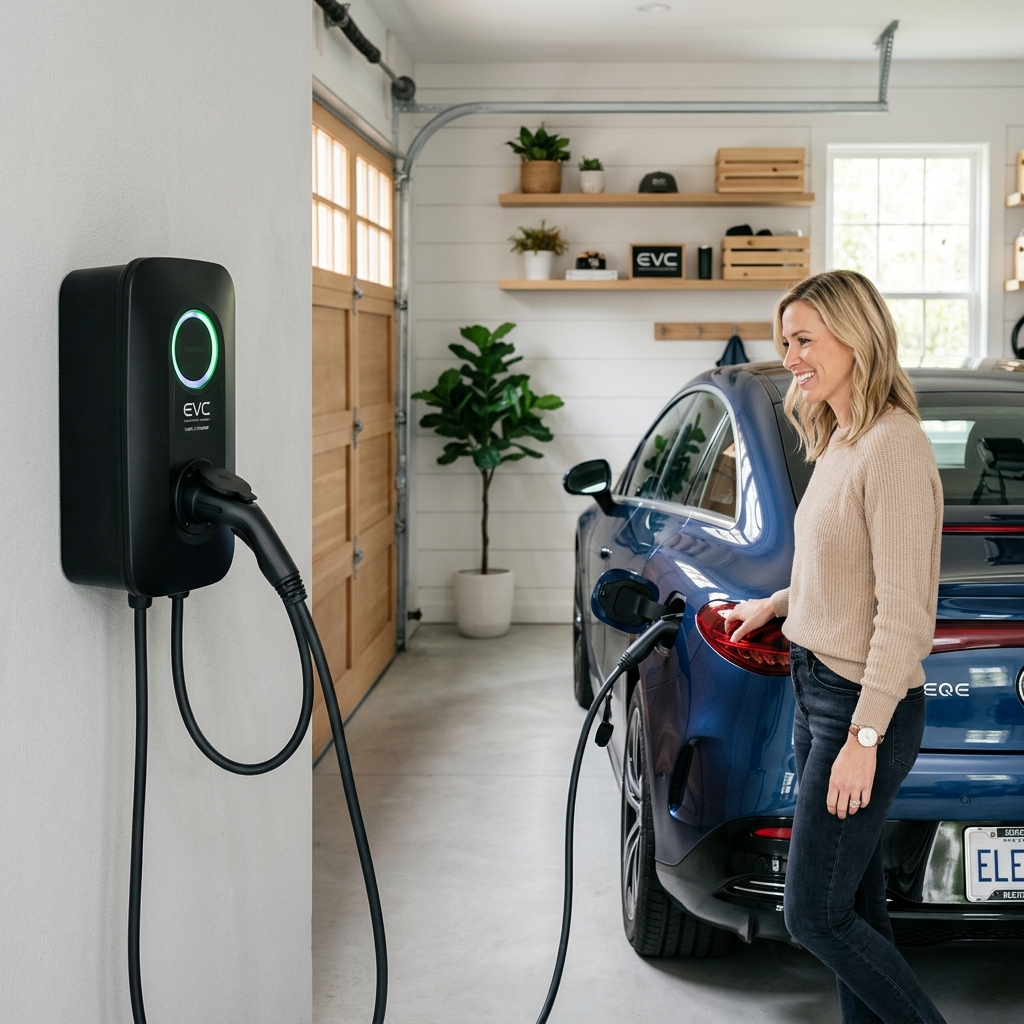
Electric vehicles (EVs) are growing in popularity across Hernando County. While driving an electric vehicle offers high performance and zero tailpipe emissions, charging it efficiently at home is crucial to the ownership experience. Standard Level 1 chargers (120V outlet plugs) are too slow, adding only 3-4 miles of range per hour. Upgrading to a Level 2 home charging station is the preferred solution.
Level 2 chargers operate on a dedicated 240V circuit (similar to a clothes dryer or central AC), charging your EV up to seven times faster. Here is what you need to know before installing a Level 2 charging station:
1. Hardwired vs. Plug-in Chargers
When selecting a Level 2 charger (such as a Tesla Wall Connector, ChargePoint, or Wallbox), you can choose to hardwire it directly or plug it into a heavy-duty NEMA 14-50 receptacle:
- Hardwired (Recommended): Connecting wiring leads directly into the charger unit. Allows high charge currents (up to 48A on a 60A breaker) and provides weather-tight reliability for outdoor driveways.
- Plug-In (NEMA 14-50): Plugging the charger into a heavy-duty wall socket. Caps charging at 40A (on a 50A breaker) but allows you to remove the charger easily for travel.
2. Breaker and Load Calculations
An EV charger represents a "continuous load," drawing high current for hours at a time. National Electrical Code (NEC) rules state that circuit breakers can only handle 80% of their rated capacity for continuous loads. Therefore:
- To charge at **48 amps**, you need a **60-amp breaker** and heavy-gauge copper wiring (usually 6 AWG).
- To charge at **40 amps**, you need a **50-amp breaker** (typical for NEMA 14-50 outlets).
- To charge at **32 amps**, you need a **40-amp breaker**.
3. Service Panel Capacity Audits
Before running high-voltage conduits to your garage, our technicians conduct a full electrical load calculation of your existing panel box. A home with a standard 100-amp or 125-amp service that is already running central AC, water well pumps, and cooking appliances cannot support a new 50-amp or 60-amp EV continuous load. If your system runs close to its load capacity, a service panel upgrade to 200 amps is required to prevent regular breaker tripping.
4. Permit and Inspection Requirements
Installing a new 240V dedicated high-voltage run requires a building permit from Hernando County. This ensures wire gauges are sized correctly, conduit materials are code-compliant, and the final connection is inspected for fire safety. Working with a licensed electrical contractor ensures your installation meets all local guidelines and complies with home insurance rules.
Ready for fast overnight charging? Contact Brooksville Electrical Specialists for upfront pricing on garage wiring and Level 2 EV charging station setups.
---Need a Licensed Electrician in Brooksville, FL?
From panel box upgrades to emergency dispatch, Brooksville Electrical Specialists has you covered.
Call (352) 655-1152